

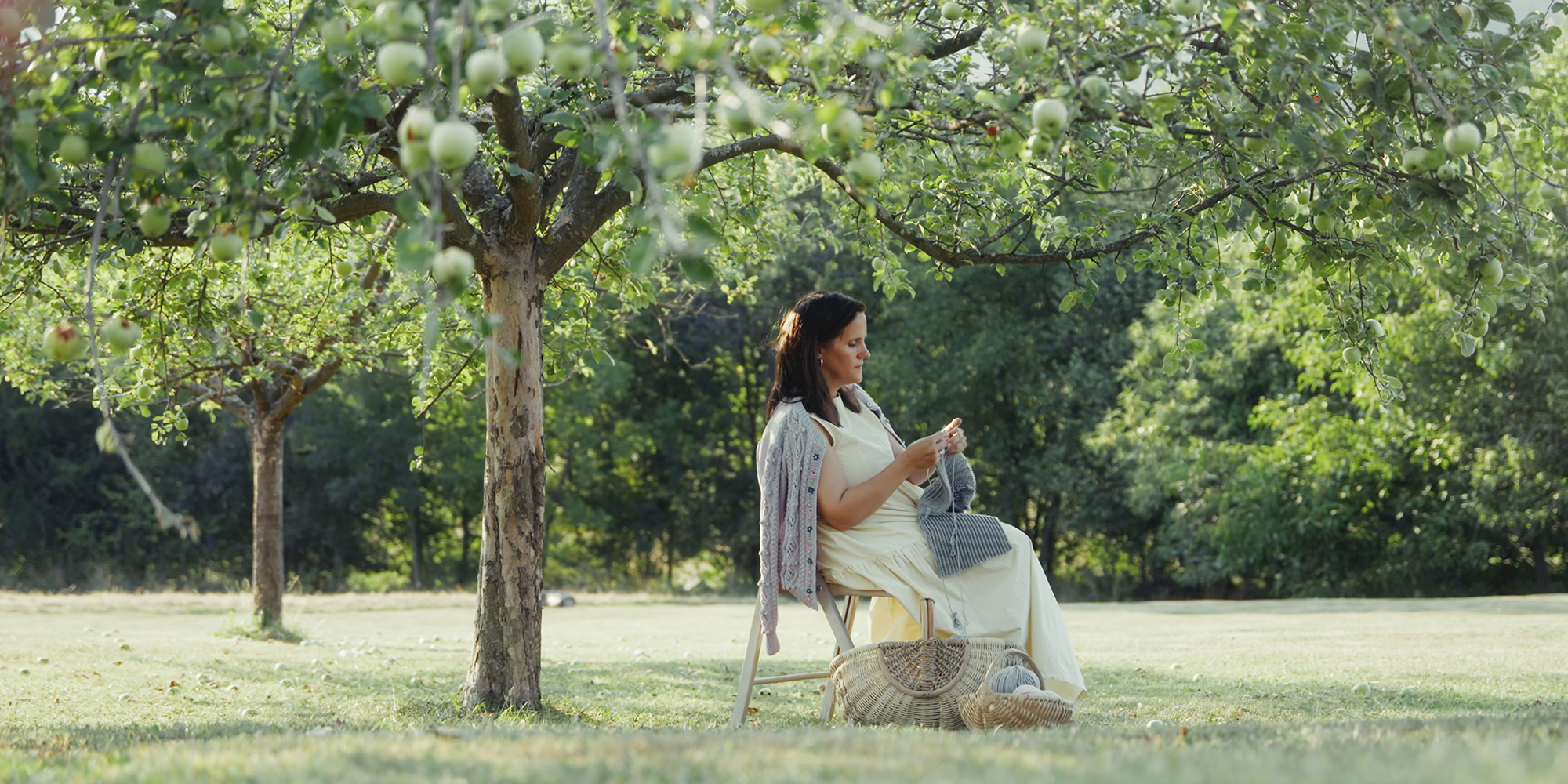
In the 1980s, in a village tucked into the mountains of Carinthia, Austria, summer announced itself not so much through a change in temperature as through a change in population. Vacationers from the Netherlands and Germany arrived in search of glacial lakes, emerald meadows, and the spellbinding stillness of the Alps. Amid this seasonal bustle, inside a modest family home, four-year-old Michaela Buerger was discovering a world governed by a different rhythm: the soft pull of wool, the delicate dance of needles, and the alchemy of turning yarn into something beautiful and enduring.
Her mother, a homemaker, knitted traditional Austrian garments and sold them to a local boutique to supplement the family income. For young Buerger, the work held an almost inexplicable fascination. She wanted to learn.
“It’s like skiing, riding a bike, or playing the piano,” she recalls. “You have to train until it goes into your hands.”
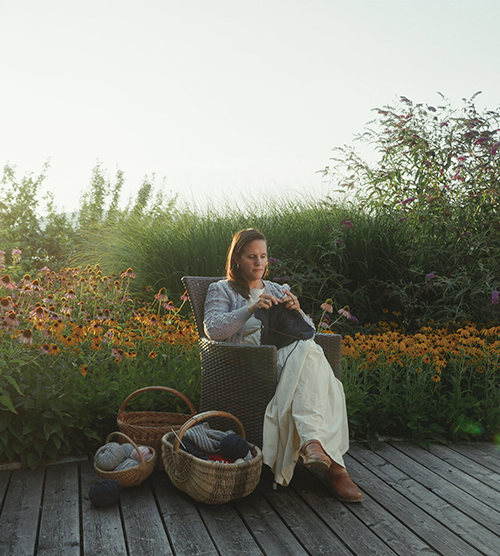
Decades later, those same hands found themselves caught in a very different tempo. Having left Carinthia far behind, Buerger moved to Paris, where she studied under Belgian designer Raf Simons and experienced the hyper-accelerated pace of the contemporary fashion world. When she launched her eponymous knitwear label in 2010, she found herself swept into fashion’s relentless cycle of novelty, producing bold, pop-art-inspired garments for a global market with an insatiable appetite for newness.
“Before COVID, I had another style, much more pop and funk,” she says. “We had huge success in Asia, in South Korea. A completely different vibe.”
Success, however, came with its own demands. As the industry grew increasingly obsessed with trend-cycling, designing became an exercise in relentless production. At her busiest, Buerger was creating approximately 350 prototypes a year, roughly one original design every single day.
“It wasn’t a healthy system. It was too much,” she says. “From 2010 until COVID, there was so much growth from the novelty of e-commerce and investors. It was like the real estate bubble: grow, grow, grow. I don’t think there was real demand from the market. Personally, I couldn’t do it anymore, and it made no sense for me.”
What she wanted, she began to realize, was not simply another idea for a collection. It was a fundamentally different relationship with making itself.
In moments of fatigue, Buerger found herself drawn back toward the tangible. She began spending hours searching for vintage pieces made with traditional Alpine and Austrian knitting techniques. What began as personal nostalgia gradually coalesced into an expansive archive, a collection that doubled as an act of historic preservation for a folk craft quietly disappearing from everyday life.
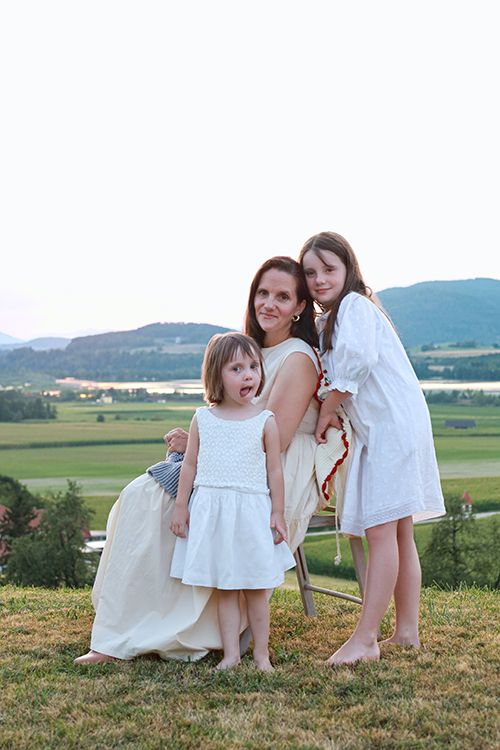
The arrival of her own child in France prompted a deeper reckoning. Living abroad while raising a young family, Buerger began to consider what she wanted to carry forward from her own upbringing. The answer lay in the knowledge she had absorbed almost unconsciously as a little girl: the value of skilled hands, the dignity of patient work, and the cultural memory embedded in an ordinary garment.
She began to steer her label in a new direction.
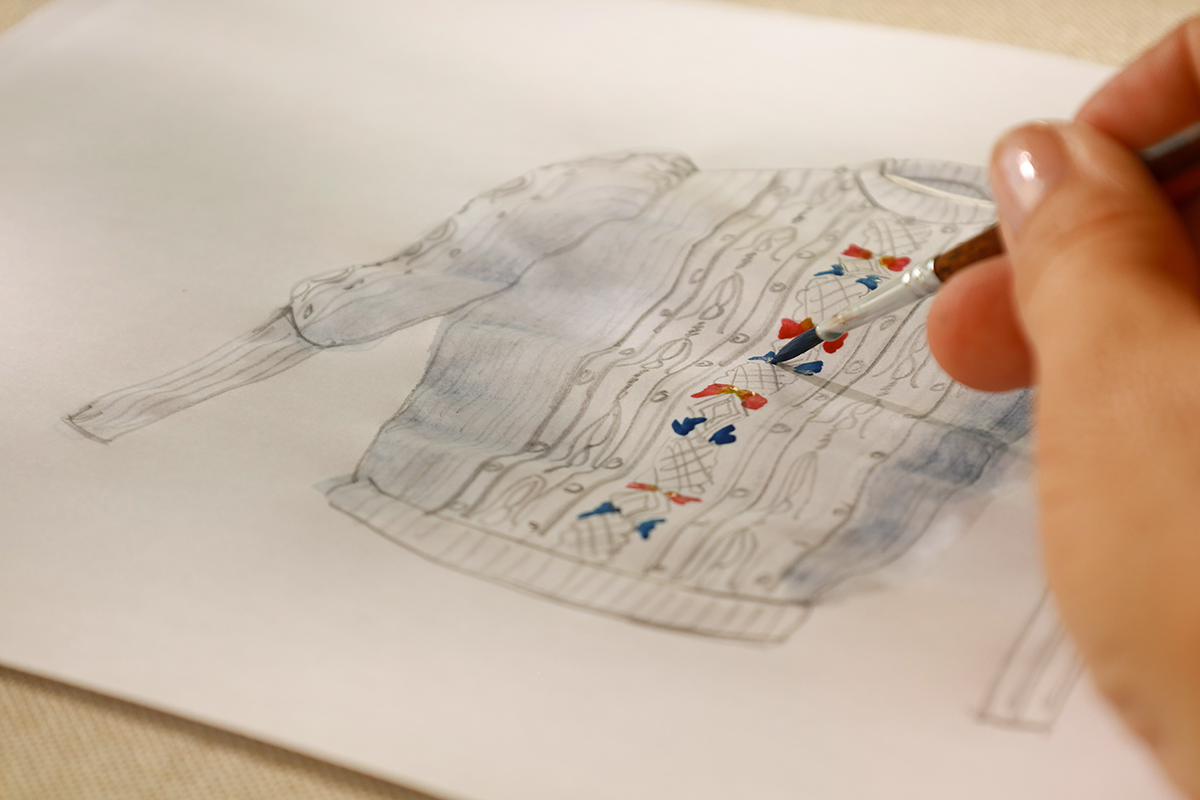
The pop-art graphics gave way to a more delicate language of ruffles, sculptural ribbing, and softly fitted silhouettes accented with peplum waists. Her designs drew on traditional Austrian knitwear without becoming literal reproductions of it. Instead, heritage appeared in unexpected details: three-dimensional blue flowers popping against a crimson cardigan, or tiny embroidered cherries scattered across a cream sweater.
The effect is less traditional folklore and more a refreshing playfulness, demonstrating that heritage need not be preserved behind glass, but can serve as a source of living inspiration.
“I came to a new aesthetic that picks up Austrian knit heritage—the patterns, the aesthetic, the embroideries—and tries to bring it out of a folkloristic drawer into a contemporary fashion context,” she states.
The transformation extended beyond the clothes to the way they are made.
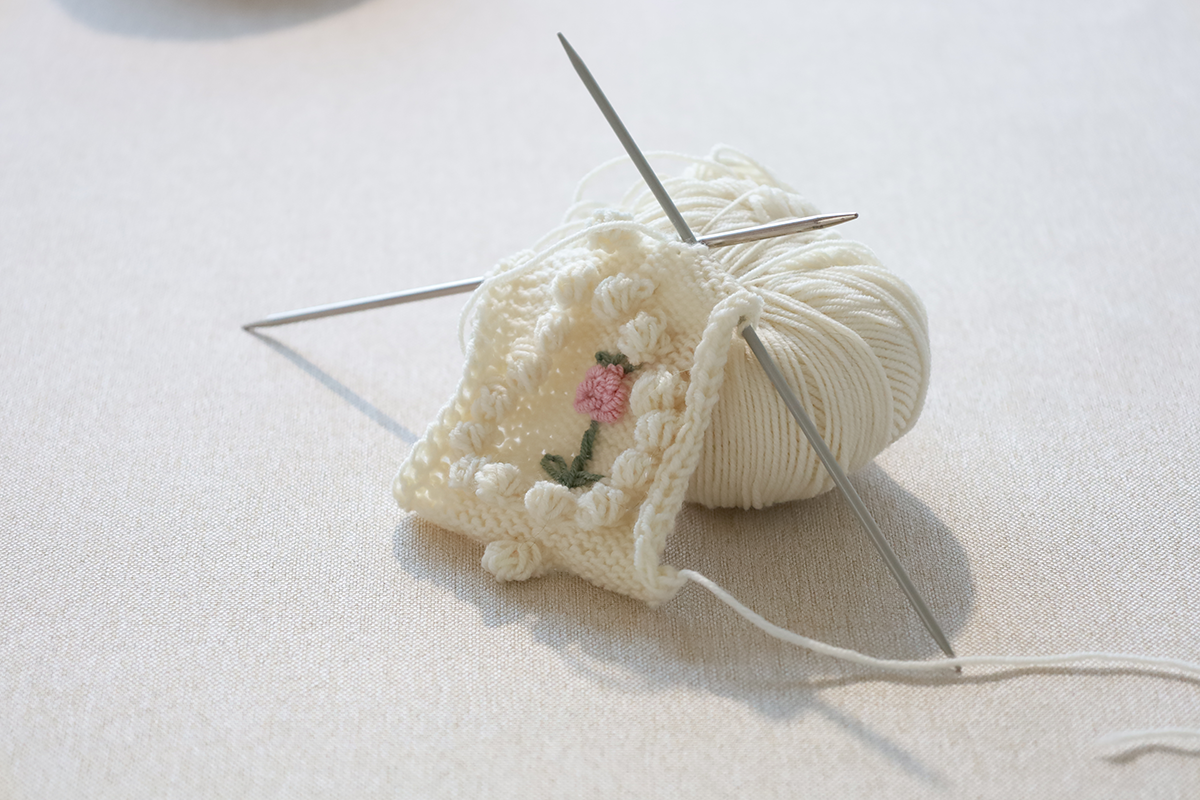
Today, Buerger sources her natural yarn primarily from small, responsible mills in Italy, Spain, Germany, Austria, and France. She has also abandoned industrial mass-production, working instead with networks of women artisans and craft collectives across Eastern Europe.
One of her earliest partnerships was with a collective in Bosnia, established after the war to help local women achieve financial independence beyond the domestic sphere. The craft itself was already there. What was needed was a framework to make it economically viable.
“In Bosnia or Eastern Europe, handknitting is often transmitted from mother to daughter,” Buerger says. “It values knowledge that was on the edge of disappearing. Suddenly, they realize: ‘I can earn money with that, and from home.’”
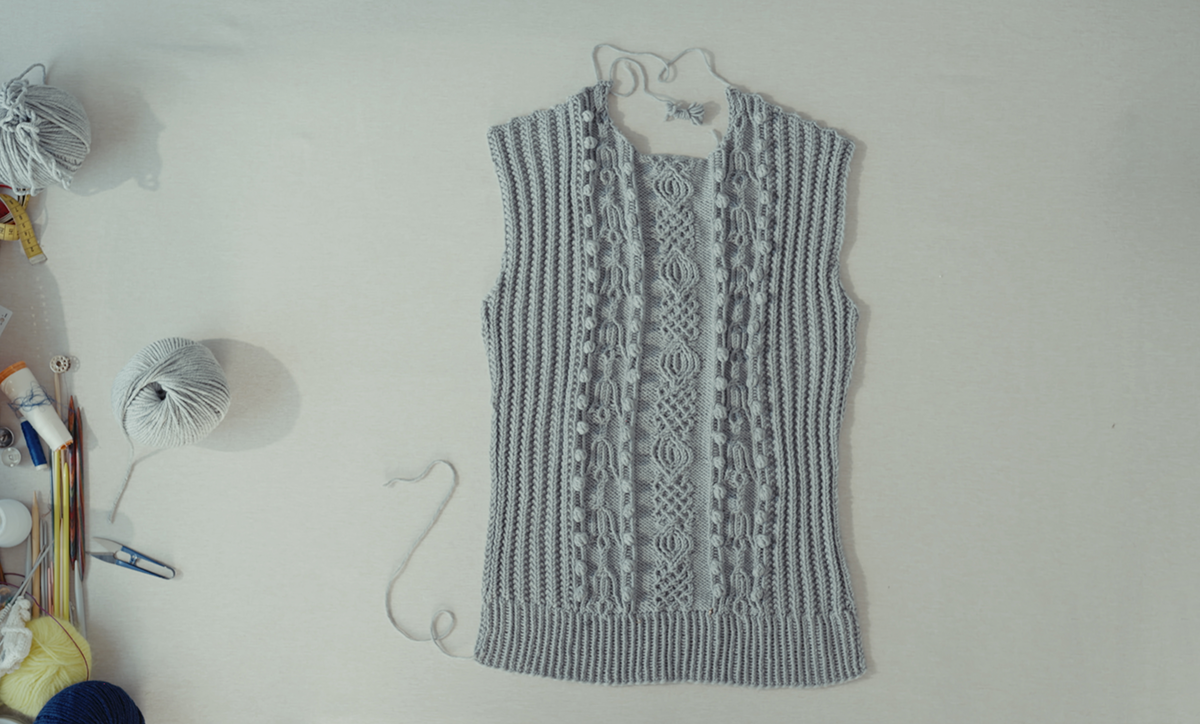
There is nothing casual about the resulting garments. Each knitter develops a distinctive tension, a subtle variation that makes the work as individual as handwriting. Yet the process is also exacting: stitch counts must be carefully maintained, proportions calculated, and patterns followed with mathematical precision. The intimacy of the handmade does not come at the expense of technical rigor.
A single garment can take weeks of dedication to complete. For Buerger, offering pieces that honour this slow, generational know-how is the ultimate stand against the unsustainable nature of fast fashion. True value, after all, lives not merely in the thread or the pattern, but in the irreplaceable touch of human care woven into every stitch.
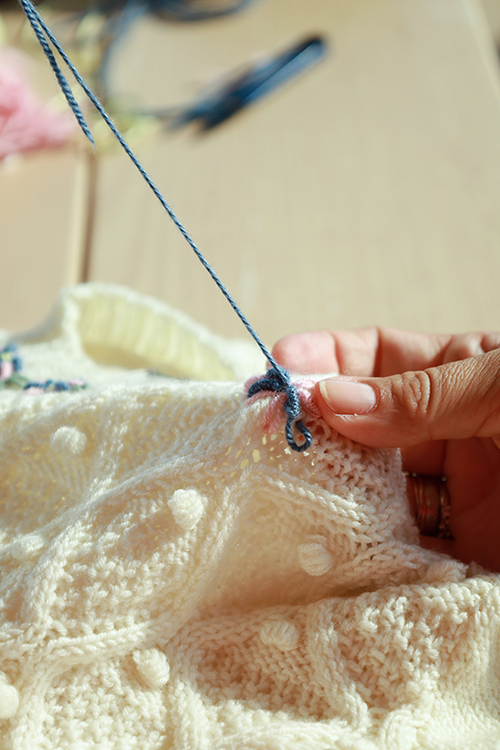
“With every garment this customer purchases, she’s supporting a person who spent at least 40 to 50 hours on that piece,” Buerger says. “With that purchase, they can support their families and send their kids to school. It really makes a difference. And this garment has a soul.”
The word soul can seem like an unlikely one in fashion, an industry so often governed by speed, visibility, and the next trend. But in Buerger’s world, it is not an abstraction. It is the accumulated presence of the person who made the garment, the traditions that informed it, and the time that cannot be hurried.
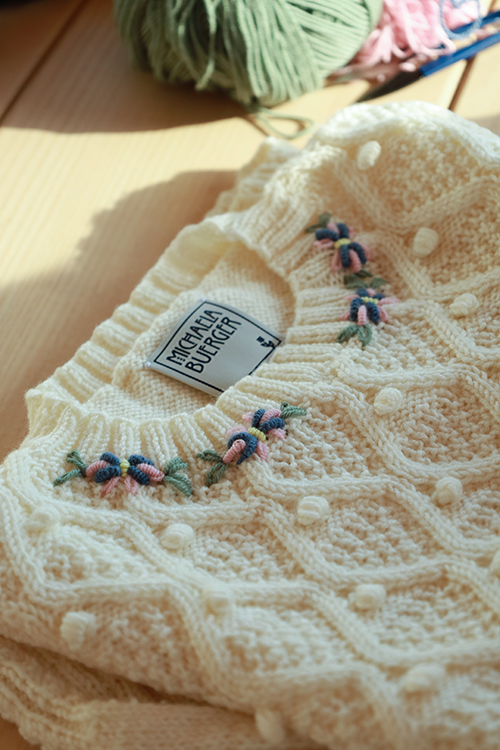
The irony is that Buerger has not abandoned fashion so much as returned to its most elemental premise: that clothing is something made by people, for people, and that the process matters as much as the finished object.
In the Alpine home of her childhood, a ball of wool became a garment through the melodic movement of her mother’s hands. Decades later, Buerger is building a contemporary fashion practice around a similar idea. The materials have traveled, the network of makers has expanded, and the designs have evolved. But the essential gesture remains unchanged: one pair of hands passing knowledge to another, stitch by stitch.




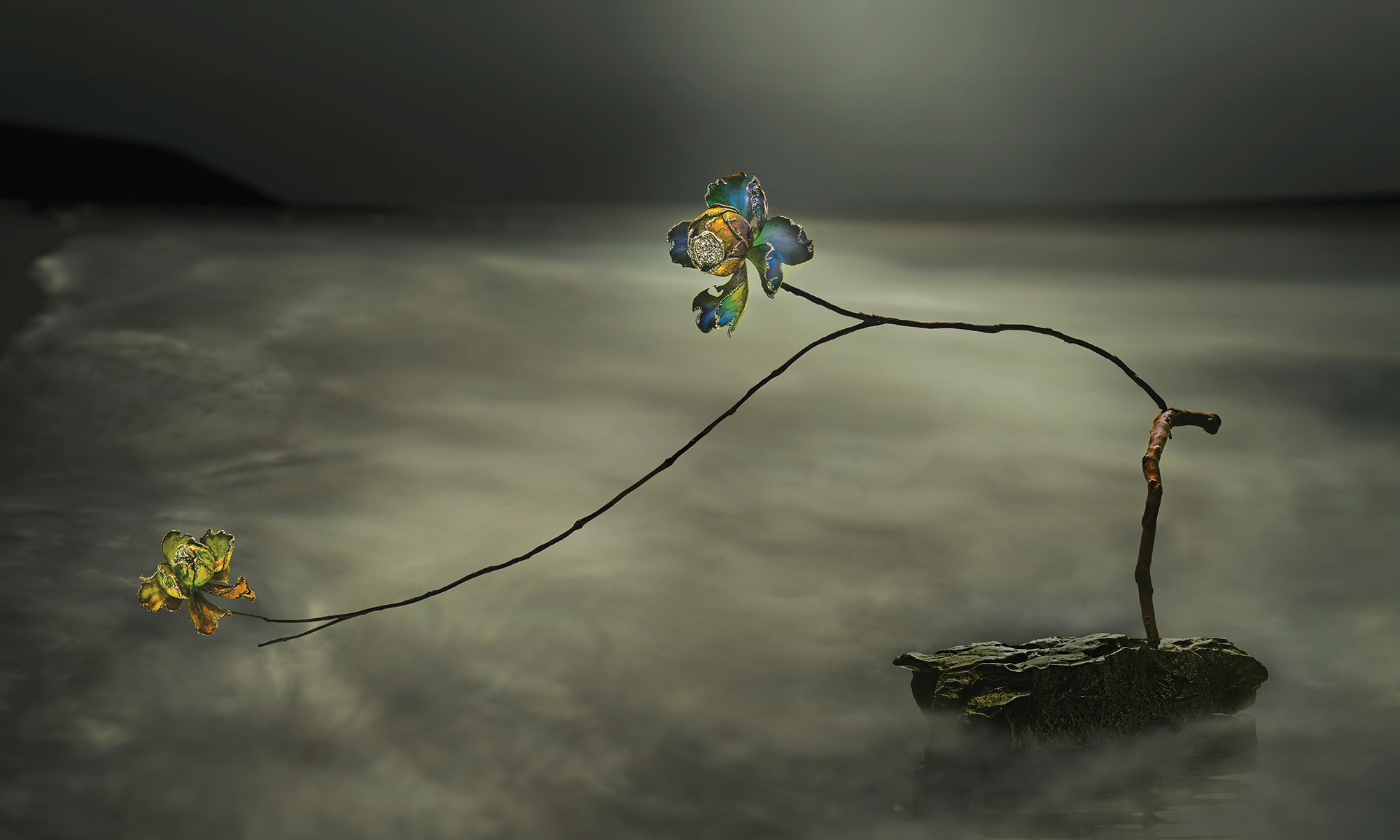
Haute Jewellery Refined by a Zen Spirit
Taiwanese artist Aka Chen instills lost aesthetic traditions into his museum-collectable designs
Revival of a Lost Art
Lee Young-Hee, Seoul’s go-to designer for presidents and international dignitaries

